Monday, April 13, 2009

Easter REDUX

imageYear by year, the truth behind the Christian celebration of Easter, the very heart of Christianity, the death and resurrection of Jesus Christ, is being progressively challenged. An Easter Redux is underway. Christians be warned!

Richard Dawkins, the scientist, author and campaigning atheist was asked, “What do you think happened to the body of Jesus, and how does that tally with the accounts of the resurrection?” Dawkins answered, “Presumably what happened to Jesus was what happens to all of us when we die. We decompose. Accounts of Jesus's resurrection and ascension are about as well-documented as Jack and the Beanstalk.” (The Independent)

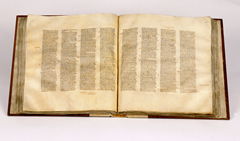
image Surprisingly, Juan Garces, British Museum Library curator of the Codex Sinaiticus Project, who should know better adds support to this popular endeavour to rewrite the story behind Easter. When he was interviewed about “the world's oldest Bible,” this is what the Associated Press article claimed:

Handwritten in Greek more than 1,600 years ago -- it isn't exactly clear where -- the surviving 400 or so pages carry a version of the New Testament that has a few interesting differences from the Bible used by Christians today.

The Gospel of Mark ends abruptly after Jesus' disciples discover his empty tomb, for example. Mark's last line has them leaving in fear.

“It cuts out the post-resurrection stories,” said Juan Garces, “That's a very odd way of ending a Gospel.”

The problem here is that Garces was commenting on one gospel; the Bible has four and the other three definitely have all the post-resurrection accounts. Unfortunately, many people have run with Garces' words and understood him to be saying the world's oldest Bible does not document the resurrection. So The Times in London reports, “Mark’s last line has them leaving in fear and makes no mention of the Resurrection.” Or a couple days after the AP news release, Irma Arkus in the Hi-Sci-Fi blog writes,

One interesting fact about Codex Sinaiticus is that one of Christian cornerstone beliefs, the story of resurrection of Jesus is not mentioned. Instead, the story simply describes disciples finding an empty burial tomb, and leaving in fear. This implies that the “resurrection” was addended by later generations of followers.

Let's be clear with the facts. The Gospels of Matthew, Luke and John in the Codex all contain resurrection and post-resurrection accounts. And the claim that the Sinaiticus Gospel of Mark does not mention the resurrection is actually false. I affirm that the Gospel ends very abruptly in the Codex Sinaiticus and in many of the oldest manuscripts, and it does not have post-resurrection accounts, but to say that it “omits” the resurrection is ridiculous. The Codex Sinaiticus records Mark 16:6 as you'll see translated below, including the words, “ηγερθη ουκ εϲτιν ωδε” translated, “He has risen! He is not here,”; you can see for yourself at the Codex Sinaiticus website. It's shoddy scholarship and sloppy journalism to report that Mark (in Codex Sinaiticus) “makes no mention of the Resurrection.”image

Review Mark 16:1-8; this is TNIV Bible text, it is a translation following the Codex Sinaiticus and adds nothing not found in the Codex.

Mark 16:1 When the Sabbath was over, Mary Magdalene, Mary the mother of James, and Salome bought spices so that they might go to anoint Jesus' body. 2 Very early on the first day of the week, just after sunrise, they were on their way to the tomb 3 and they asked each other, “Who will roll the stone away from the entrance of the tomb?”
4 But when they looked up, they saw that the stone, which was very large, had been rolled away. 5 As they entered the tomb, they saw a young man dressed in a white robe sitting on the right side, and they were alarmed.
6 “Don't be alarmed,” he said. “You are looking for Jesus the Nazarene, who was crucified. He has risen! He is not here. See the place where they laid him. 7 But go, tell his disciples and Peter, 'He is going ahead of you into Galilee. There you will see him, just as he told you.' ”
8 Trembling and bewildered, the women went out and fled from the tomb. They said nothing to anyone, because they were afraid.

Most English translated Bibles in print today  do not end here, even though the vast majority of New Testament Greek scholars agree that the oldest and best manuscripts end here. The most popular English translation, the NIV, for example, has another 12 verses which gives Mark's Gospel a smoother ending, more like we find in Matthew and Luke. However, in a footnote the NIV points out, “The earliest manuscripts and some other ancient witnesses do not have Mark 16:9-20,” which means we know conclusively that Mark did not pen this ending. His writing ends at verse 8, as quoted above. Verses 9-20 represent an early attempt to finish the story, to give Mark an ending just like Matthew and Luke. We assume that Christians were uneasy with Mark's unique and abrupt ending. I am not uneasy with it. It is my favourite Easter Sunday reading. What can we make of the authentic ending of Mark's Gospel (16:1-8)?

Well, it's ironic, isn't it? “They said nothing to anyone.” All through Mark's gospel, people are told by Jesus not to tell anyone about what he has just done, but they immediately disobey and go tell everyone! For example, Jesus heals a man: Immediately the leprosy left him and he was cleansed. Jesus sent him away at once with a strong warning: “See that you don't tell this to anyone." Instead he went out and began to talk freely, spreading the news. (Mark 1:43b, 44a, 45a)

We may question why Jesus frequently gave this command, why he didn't want too many people discovering who he was, why he didn't want a frenzied mob constantly pursuing him. We do know that in chapter 9, Jesus tells his disciples not to tell anyone until he had been raised from the dead. It is the death and resurrection of Jesus which makes sense of everything else Jesus did. And now, in Mark chapter 16, that time has come! Jesus has been resurrected, but the women are silent! Jesus' repeated command “Say nothing to anyone” is almost exactly what Mark says of the women, “they said nothing to anyone.” It's Mark's final irony.

Looking back at this, we know now that they did get over their fear, and they did tell the other disciples, and they were so effective at telling the disciples and followers of Jesus that over 500 of them gathered together 40 days later and saw Jesus ascend into heaven just after giving his final words to go and tell everyone. Why didn’t Mark tell the rest of the story like Matthew, Luke and John?

Why end the story unresolved as Mark does?

In what I think is an incredibly great book on reading this gospel, Mark As Story, the authors say this about the ending:

It cries out for a resolution, cries out for the hope that someone will proclaim the good news. And who is left at the end of the story to do this?
Not Jesus.
Not the disciples.
Not the women who fled the grave.
Only the readers are left to complete the story! (pg. 143)

The rest of the story depends on us, not them. Mark 1:1 claimed that this gospel was the beginning of the good news about Jesus the Messiah. The rest of the story is up to you and me. Just as it did not end with the fear and failure of the women, so it does not end even with our fear and failure. Jesus does not give up on us when we fail him. That’s just the beginning of the gospel, there’s more to be told! He's not finished with any of us. This great news of life in Christ will continue to change people’s lives as we share it with them, in spite of our fears and failures.

It's our turn. The Easter Redux is underway and Richard Dawkins gets better press! It's up to you and me to talk about the Resurrected Jesus and the difference he's made in our lives. In thinking about Mark's abrupt ending and the passing of the gospel torch so to speak, I was inspired to think again by a Starbucks coffee cup when I read “The Way I See It”: image

There is no end to a story—it goes on indefinitely into eternity.  Every time a story is read, it’s alive and it’s different because the reader is different. 
                                              —Alice Hoffman

Related Sermon

The Rest of the Story
The ironic ending of Mark's Gospel (16:1-9) invites us to continue the story where Jesus’ first disciples left off. The gospel of Jesus Christ continues to transform lives as it is told.

Sunday, March 29, 2009

Why We Should Elect William Shatner (aka Captain Kirk) to be Canada's Next Prime Minister

Recently when asked by fans if he would like to become Canada's Governor General (chief of state, but more of an honourary figurehead), William Shatner turned them down saying that rather than a ceremonial role he would want to be Prime Minister of Canada, an active role in which he could "lead Canada into even greater exploits."

Just as Arnold Schwarzenegger could do well as California Governor, and wanting to improve on the Global National piece above, I believe a case can be made for William Shatner, or better yet Captain Kirk, to be the next great Canadian Prime Minister.

  1. Star Trek and Captain Kirk (aka William Shatner) present us with a better, ideal future—where technology solves all problems, there is full equality and no racism. There's no more poverty, no more war and no global financial crisis—they don't even use money anymore! Star Trek has always been about "boldly going where no one has gone before." That's the kind of leadership we need in a Prime Minister.
  2. No matter what the challenge, Captain Kirk always came up with a plan that prevailed so that every episode of Star Trek could end with the Enterprise and her crew ready to fly to their next mission. Faced with the worst case scenario, the Captain questions himself, "What have I done?" And Dr. McCoy encourages him saying, "What you had to do, what you always do. Turn death into a fighting chance to live." image
  3. The starships, aliens and phasers are really cool, but Captain Kirk always focused on the human drama (or human-alien drama). He excelled as a Captain not because of the Enterprise's incredible phaser power and photon torpedoes, but because he knew how to get inside his opponent's head and win (think "The Corbomite Maneuver").

Regular readers of my blog are probably wondering, What in the universe is this all about? Isn't Ken's blog about the Bible, interpretation and contemporary issues facing Christians? For you, here's a more suitable title for this posting:

Everything I Ever Needed to Know about Revelation (and apocalyptic writings),
I Learned from Captain Kirk and Star Trek

ussenterprisea104mh6And, yes, I am serious. The church has been plagued with the most strange, alien and bizarre interpretations of the book of Revelation (as well as the other Biblical apocalyptic writings). We need a new and better way of understanding Apocalyptic writing.

We don't write apocalypses in 2009; it's not a genre used today, but science fiction is everywhere around us, on TV (Fringe), in movies (new Star Trek movie coming soon!) and in novels (Twilight). We would have a much better chance of rightly understanding biblical apocalyptic writings like Revelation if we think of them as being like science fiction. No Trekkie expects to get in a fight with a Klingon tomorrow, but to learn something about honour and loyalty—well, this is quite possible. Reading Revelation like we read science fiction is far more respectful and insightful than reading it like the authors of the popular Left Behind novels who see it more as a Farmer's Almanac or horoscope which can be used to scare people into believing.

My three points above promoting Captain Kirk for Prime Minister are actually about how Star Trek can help us to understand Biblical apocalyptic writings like Revelation.

  1. Apocalyptic writings like Revelation give us a vision of a perfect future, but present no hope for us to get there apart from the incredible intervention of "the Son of Man." The writings assure us this future will come in spite of present circumstances.
  2. Revelation does comfort us in the present crisis we find ourselves in. It sometimes shows despair about anything getting better in our world, but still it constantly affirms that God is in control and despite appearances, his plan is in motion. God will bring about future victory through our present defeats, just as Jesus Christ prevailed through dying on the cross. The resurrection turned death into a chance to live, and to live life to the full! image
  3. Symbols, wild imagery and fixation on special numbers are found throughout apocalyptic writings (the Beast, ten horns and seven heads, 666), but the focus should be on the human drama and how Christ, the Son of Man, is leading us. Ignoring this Christ-centered focus, many have come up with the strangest ideas of what Revelation is all about. Personal recommendation: don't get so caught up in the symbols, imagery and number that you lose sight of Jesus!

As it turns out, both Revelation and science fiction may seem to be describing the future, but they both have a lot to say about the present. They both offer quite a critical social commentary on how we live today, on how we treat others and on how much we need to change. To conclude, the following video shows three scenes from three eras of Star Trek. Each clip is followed by a verse from Revelation showing how both have much the same message and graphic method of presentation.


The pictures and video clips used here are being used solely for academic purposes and no profit of any sort is being derived. Credits as follows:
1. Star Trek: The Original Series, "Let That Be Your Last Battlefield" (CBS/Paramount Television)
1b. picture of Star Trek creator Gene Roddenberry and most of the cast of the original series of Star Trek at the dedication ceremony of the test Shuttle Enterprise (renamed due to a massive letter writing campaign by Trekkies)
2. Star Trek IV: The Voyage Home (CBS/Paramount Pictures)
3. Star Trek: Phase II, "Blood and Fire, Part 1" (James Cawley Productions) You've really got to check this out! It's an all new web-based Star Trek, continuing The Original Series, year 4 of the 5 year mission: Star Trek: Phase II. They've even had Original Series stars like Walter Koenig (Chekov) and George Takei (Sulu) included in their production. "Blood and Fire" is the fourth episode and the first teaser for this episode said that it was dedicated to "all the men, women and children who have died of AIDS because of the silence, the inaction, the cowardice and the hypocrisy of those few who had the opportunity to speak up and make a difference—and did not. " That, in my opinion, is classic Roddenberry Star Trek.
3b. picture from Star Trek: Generations (CBS/Paramount Pictures)

STP2_Banner_468x60_001

Friday, March 13, 2009

What Ads Have Theists Run on Buses?

The claim has been made that the current Atheist Bus ads are being run in response to ads containing "Christian doomsday preaching that suggested that you would go to hell if you didn't believe in God particularly their belief system." I have not heard the people behind the Atheist Bus ad campaign making such a claim; instead they said they wanted "to bring awareness to the general public about atheism, humanism.... we hope to spark conversations between believers and non-believers." I think that's cool and I welcome the respect and conversation, so I wanted to respond to the more "inflammatory" claim. Personally, I would not approve of damning ads, though as previously mentioned, I did like the Die Hard 4 parody ad (see previous post).

When Global's Darryl Konynenbelt interviewed a representative from the British Humanist Association which originally designed the Atheist Bus ads, she said that their ads were in response to some Christian ads that ran on UK buses with a link to www.jesussaid.org (see previous post for the video). Then she commented that these ads "clearly said that anyone not following Jesus would be condemned to eternal damnation and hellfire." These ads were Bible verses about Jesus which so far as I could see never condemned anyone to hell, but did at times present an exclusive message: Jesus is THE Way, for example. Here's my quick mock-up of the bus ad shown on a UK bus in the documentary:

It was said of JESUS: Behold the Lamb of God that takes away the sin of the world. 
                                                                                   John 1: 29

I liked this one from the UK bus ads:

JESUS said: When the Son of Man comes, will He find Faith on the Earth?
                                                                                   Luke 18: 8

Anyhow, what about ads in Canada? The atheistbus.ca website gave a link to a blog with links to some Ottawa bus ads that Christians have run. I remember some of these also running on the TTC, in particular the "busstopbiblestudies" ones which always included the name of a local church with service times. See what you think....

024

Sign

007

018

alpha  015

Monday, March 9, 2009

There's Probably Something to Talk About

ttc bus ad

Atheists are taking it to the streets in Canada, with the Atheist Bus Campaign. Some people are outraged; the ads have been banned in Halifax, but accepted in Toronto and Calgary. For what it's worth, I was reminded of a quote from Philosophy for Dummies which claims that "Atheism is an urban phenomenon."

Global TV's new investigative journalism show, 16x9 The Bigger Picture, ran quite a good story on the bus campaign and debate. Watch it! It might give us something to talk about...

tmlPersonally, I think this bus ad campaign gives us an opportunity to discuss something more significant than the Maple Leafs losing yet another game. All too often we spend most of our social time talking about nothing that really matters. This discussion, I think, matters. And on this, it would seem that many atheists in Toronto agree with me, a Christian! In the FAQ section of their website, they give this as the reason for the bus ad campaign:

Through our ads we hope to spark conversations between believers and non-believers so that we may better understand each other and learn from one another.

That sounds reasonable to me. The ads have given me a couple opportunities to have a couple very brief conversations and I hope for more, so here I am blogging about it. Post a reply, let's dialogue.

Now some Christians are among those who are outraged about these atheist ads appearing on buses. I would encourage a more even response. Outrage over Dan Brown's The Da Vinci Code only worked to make it more popular. Rage at schools reading Harry Potter books or more recently The Golden Compass books also seems misplaced. We can do better than "rage" as we respond to popular things happening around us, can't we?

A retired professor of Wycliffe College, University of Toronto, who now serves at my church as an associate priest came up with a counter-slogan to the bus ad as well as some advice:

"There probably is a God--so stop worrying, the world is not a runaway bus."

That's theologian David Reed's offering, when asked to give an alternative to the atheistic slogan that's been plastered on [buses] .... Like his slogan, the approach Reed recommends in responding to these ads is creative and non-polemical: “Don't get grouchy and defensive and reactionary; treat it much more lightly.”

I agree with him (the full article can be found here). The atheists sponsoring these bus ads want to spark conversations, not fireworks, so let's talk. Maybe we will find it helpful to better understand where they're coming from, and maybe then they too would like to hear where we're coming from. And maybe we can go there together on the TTC.united church ad

P.S. Does anybody remember the bus ad that was all over buses everywhere promoting Die Hard 4? Isn't it odd that it was never controversial? I even looked up John 6:27 before I fully clued in.

OLYMPUS DIGITAL CAMERA

Sunday, November 23, 2008

Never Have Your Faithful Dog Stuffed

I finally found a new metaphor for understanding Jesus' instruction not to pour his new wine into our old wineskins. I could understand Jesus' metaphor; he explains it well, but it's just that we don't use wineskins anymore. Jesus said, "Neither do people pour new wine into old wineskins. If they do, the skins will burst; the wine will run out, and the wineskins will be ruined. No, they pour new wine into new wineskins, and both are preserved" (Matthew 9:17, TNIV). Jesus is doing something new and we shouldn't expect to contain him in the old wineskins of our limited expectations.dog Alan Alda's biography titled Never Have Your Dog Stuffed introduces a new metaphor for understanding this wineskin concept.

When Alan Alda was eight years old he experienced a great trauma. "My father was trying to stop me from sobbing because we were burying out pet dog," so as Alan explains, "my father said maybe we should have him stuffed." It turned out to be a bad idea. When the dog came back from the taxidermist, he didn't look right. Alda continues, "We kept our stuffed pet on the porch and deliverymen were afraid to make deliveries. There are a lot of ways we stuff the dog, trying to avoid change, hanging on to a moment that's passed. There's a lot of my life that was learning that lesson over and over again."

Well, I loved Alan Alda's biography and I am so thankful that he gave me a new metaphor for what happens when we try to put Jesus' new wine into old wineskins. Sometimes we think we've finally got this "faith in Jesus" thing figured out. That's when we try to preserve it. We try to stuff the dog with our expectations of how things work with God. We want him to be predictable. We want to know that we understand how faith works. Alan Alda is right: that's just stuffing the dog and try to hold on to what we already know. Jesus is telling us that our faith is alive and will grow and change and expand and we better have new wineskins! Immediately, Matthew details two events to illustrate what Jesus meant. I want to quickly comment on the second one.

Just then a woman who had been subject to bleeding for twelve years came up behind him and touched the edge of his cloak. She said to herself, "If I only touch his cloak, I will be healed."

the_touch_zoom_777Jesus turned and saw her. "Take heart, daughter," he said, "your faith has healed you." And the woman was healed from that moment. (Matthew 9:20–22, TNIV)

This event presents a challenge for us to understand since the cultural differences are enormous. The quick version: this woman had NO life. She was more desperate than we can imagine. When the text says that she "had been subject to bleeding for twelve years," it likely means that since entering puberty this woman in her mid-twenties had been enduring menstrual bleeding and hemorrhaging in between her monthly cycles. In a pre-tampon, pre-bathroom kind of culture where these kind of bodily matters were talked about more crudely and publicly than in our culture, this young woman would not only be publicly shamed, she would be a total outcast. No one would accept her or try to help her because this kind of bleeding makes one unclean and therefore untouchable according to the Jewish law. I don't think we can imagine this woman's pain and humiliation. How can we relate to the fact that due to her bleeding she has been overlooked in the expected practice of having your marriage arranged by your father?

Even if we can begin to appreciate her desperation for healing, we find her approach unsettling. It's like she believes that Jesus is magical. "If I only touch his cloak, I will be healed." (Mark's gospel really emphasizes this notion of magic.) There's something not right about that. We would've gone about it differently because we know it's about personal faith in Jesus, not about touching his clothing and experiencing the magic. We expect that we have to get our theology right first, before we ask, before we pray, before Jesus could answer us. And that is stuffing the dog! We want to put his new wine in our old wineskins.

Commending this woman's faith, such as it is, Jesus encourages her, "Take heart!" Jesus sees in her approach a "new wineskin" kind of faith. In total desperation she reached out to Jesus, believing that after twelve years of horrible suffering, she'd found the way out of it. And she was right! Jesus had compassion on her, "Your faith has healed you." Matthew wants us to understand that this is the "new wineskin" kind of faith that Jesus had been talking about. Plus, I suspect the TNIV (and other English translations) are weak in translating the Greek verb as "healed" when Jesus likely intended the more common meaning, "saved." "Your faith has saved you." She was saved, rescued from a horribly outcast life and brought into new life by the grace of Jesus through faith, "new wineskin" faith.

We expect that we have to get our beliefs right before God will act, but Jesus surprises us by having compassion on people who don't have it all figured out. He seems to race ahead when people show the slightest inkling of new wineskin kind of faith. A young preacher preparing for a huge stadium event in New York ran into a big problem the night before it was to begin. He was training a team of counseling volunteers who were to assist him but he could not be heard over the roar of airplane engines coming out of La Guardia Airport at the rate of dozens per hour. So the young preacher paused, glanced up and quietly said, "We'll have to do something about this noise. This just won't do." He bowed his head and said a simple prayer to the effect, "Lord we ask you to shift the wind and send these planes in another direction. Thank you. Amen."

Personally, I'm shocked that a preacher would pray that way. One of the volunteers that day wrote, "Well we were believers but this was a tall order. We weren't sure what, if anything, to expect. But God did it; he answered our prayers in a wondrous way! The morning newspaper reported that the winds had changed during the night, and the airplanes over the Stadium had to be routed another way. For several days thereafter, thousands of people came to Christ under Billy Graham's preaching. At the conclusion of the crusade, the winds reverted to their normal flow, and the airplanes returned to their normal flight patterns."

God works powerfully through those who like Billy Graham and the bleeding young woman have "new wineskin" kind of faith. Most of the time I still expect that I have to get my theology right first. I'm pretty good at stuffing my faithful dog. Alan Alda actually helped me to see that I've been doing that with my all of my life, not just my faith. Having new wineskins is all about giving God the space and the room to do something new, to actually change my life in ways I may not expect. My faith is to grow and change and expand, so I better be willing to contain it in a new wineskin, flexible and ready for what Christ will do. I am one of too many Christians who has been settling for a lesser faith, stuffing it with my own thinking about God and then putting this faithful dog out on the porch where it scares away any who might want to know more about faith in Jesus.

Note: The above picture of Jesus is a great painting called "The Touch" by Ron DiCianni.

Related Sermons

Expectations

The above blog posting is quite a "snip-it" from my sermon based on Matthew 9:17-26. We worship a Saviour who exceeds our expectations. This passage of Scripture has a pretty amazing approach to challenging our expectations and re-shaping our faith.

Sunday, October 19, 2008

The Bridge to Nowhere

Yesterday morning at a men's group I attend, we were discussing 1 Thessalonians 1 which gives a great description of conversion—the response to the Gospel/Good News by which one becomes a Christian.

... our gospel came to you not simply with words but also with power, with the Holy Spirit and deep conviction.... You became imitators of us and of the Lord, for you welcomed the message in the midst of severe suffering with the joy given by the Holy Spirit. And so you became a model to all the believers in Macedonia and Achaia. The Lord's message rang out from you not only in Macedonia and Achaia—your faith in God has become known everywhere. Therefore we do not need to say anything about it, for they themselves report what happened when we visited you. They tell how you turned to God from idols to serve the living and true God...

Is that message ringing out from our churches today? How are we doing at evangelism? Could I say enough to be able to invite a friend to trust in Jesus and to experience the life change I have experienced? John Bowen wrote a great book which aims "to show that evangelism is, or at least can be, normal for all those who consider themselves followers of Jesus" (p.16, Evangelism for "Normal" People). In contrast to those Thessaloniansimage and their ringing message, many of us may resonate more with Rebecca Manley Pippert who confessed, "There was part of me that secretly felt evangelism was something you shouldn't do to your dog, let alone your friend" (p.16, Out of the Saltshaker).

Recently, on a church website, I came across a new way of presenting the gospel called "The Big Story." The author, James Choung, believes we need to go beyond The Bridge illustration which we've used so much in the last few decades (think: Four Spiritual Laws, Steps to Peace with God, or "The Bridge"). Maybe you'll recognize it...

image

It seems to me, that for many Christians today, this Bridge illustration has become "the bridge to nowhere." We know the plan, we can talk about this bridge if we had to, but we're not actually sharing our faith with others, so it remains just a bridge we could draw if we needed to, not one that people have actually crossed. And a bridge that exists only in our minds, my friends, really is "a bridge to nowhere."

Evangelism is one of the many activities we no longer have time for in our busy, fast-paced world. Ironically, it is in this busy fast-paced world where I've heard more about evangelism in the last couple years than in the church! Evangelism is the sharing of good news, so Tim Sanders believes we should diligently read the latest greatest business books so that we can "evangelize" the best ideas from these books to everyone we know. Sarah Palin and John McCain are showing what mavericks they are by evangelizing Alaska's infamous Bridge to Nowhere which was never built because Palin said "no" to the pork barrel spending of Congress. This "evangelism" that has nothing to do with the Good News of Jesus started with Guy Kawasaki who pioneered the concept of evangelizing a product to promote its sales. Thanks to Kawasaki's plan of evangelism, from the early years of Macintosh computers to today, Apple owners never stop talking about the superiority of their computers! I've been wondering if the church could learn a point or two from a book I've been reviewing titled Creating Customer Evangelists. Everyone seems to be out there evangelizing something! Hopefully, the problem is just me and there really are many, many Christians out there evangelizing the good news of Jesus because we really do have a life-changing message to share. Maybe it's high time to reclaim evangelism for the true gospel of Jesus Christ.

I know one Christian who is doing something—my wife. She told me that her new carpool friend from work is visiting our church this Sunday. I think that's great since they've only just met a short while ago. And, actually, it's really great since this friend is also bringing her boyfriend who hasn't been to church for over five years since leaving a narrow-minded, ultra-conservative church (and I might be tempted to say cult-like group). Last year, my wife invited a friend that she had taken a class with to come to our church's Alpha Course, and she did come because she had been meaning to get around to looking into Christianity! So I do know from my wife's example that some evangelism is taking place. (And as a footnote about myself, I guess I do want to clarify that I am trying to share my faith, but I've had some friends in the last couple years that I just haven't been able to make much progress with.)

I'm hoping to get some feedback on what you think about this new way of presenting our good news. I like that James Choung is trying to stress not just a "decision" but transformation. He talks not just about the "individual" but about the Christian community. And he is less focused on the "after-life" and more focused on our life together on a mission. I really would like to hear what you think about this presentation. (After playing "The Big Story", you'll see a link to play "The Big Story, Part 2" which I recommend as well.) After viewing it, think about, and make a post. Maybe we can talk about it together. Just maybe we should be ready to draw four circles rather than our plan for a bridge which doesn't seem to be leading us anywhere. Let me know what you think.

Related Sermons

Forfeiting Life

God's grace is amazing and even overwhelming at times. But forfeiting the grace that could be ours is not a winning strategy. The book of Jonah offers several "prophetable" insights about the lengths God will go to so that no one forfeits the grace that could be theirs (Jonah 2:8).

Not Ready

This message from John 4:27-42 explores the top reasons why so many of us in the church today believe that we are "not ready" to share our Christian faith. The Samaritan woman from the well instantly becomes an evangelist and her town is changed! What could we learn from this scene in the life of Jesus?

The Gospel according to Canada

There is a rather Canadian way of being a Christian. We value the privatization of religious beliefs. What Jesus says in Mark 4:21-25 challenges our Canadian practice, urging us to make public what is now private.

Friday, October 10, 2008

Codex Sinaiticus: It's Greek to Me!

image Codex Sinaiticus, one of the oldest and most famous Bibles in existence, is indeed written in Greek. Friends of mine were alarmed by a BBC article which claimed that Codex Sinaiticus was "The Rival to the Bible." I too was quite alarmed by this article and its apparent aim to pose "some very uncomfortable questions" to "those who believe the Bible is the inerrant, unaltered word of God." I've chosen to use this blog entry to respond to some of these very uncomfortable questions which are nothing more than an attempt to sensationalize and distort the simple truth.

What's this about? Well, this is actually old news that the BBC is reporting. This summer a new website was launched which by next July will give full access to the full text of the Codex Sinaiticus, a fourth century Christian "bible", written in Greek, containing the New Testament, much of the Old Testament and a couple post-apostolic writings. Back in July they launched the site, giving access to high tech images of the Gospel of Mark and the book of Psalms. At that time CNN published the article, "World's oldest Bible goes online"; it's a better article than the BBC one as it is more factual, less distorting and less sensationalized.

There's quite a story behind the discovery of Codex Sinaiticus; it could almost be a script for Indiana Jones and the Keepers of An Amazing Bible. The discoverer, Constantine Tischendorf, somehow persuaded/extorted/tricked some Egyptians monks into giving him pieces of this Bible and they ended up in Russia, Germany & Britain. (You can read more about this exciting story in the Connected Photographer.) The website project will bring together high tech photos of all the pages and reunite the parts of this book, plus they are also transcribing and translating it, as well as giving us photos enabling us to see alterations and amendments made to the text. I think this is great news! I'm thrilled by the website and consider it to be quite a privilege to be able to actually view the pages of this very elegant, very important New Testament manuscript. Eight years ago I remember being in a Grand Rapids Bible bookstore with a colleague. We happened to find a book which was a transcribed copy of Codex Vaticanus, a manuscript equally as famous and important as Sinaiticus. My friend bought it for $120. I was quite jealous, but I knew there was no way my budget at that time would ever allow me to make such a purchase. Now, I'll have full access to Sinaiticus and not have to go broke buying a copied version. In preparing this article I discovered that The Center for the Study of New Testament Manuscripts already has photographs of Sinaiticus and many others online (just not at the high tech quality being offered by the new Codex Sinaiticus website).

So what about this BBC article was so alarming? They claimed that Codex Sinaiticus contains "anti-semitic writings" and many "discrepancies" with the Bible as we know it. Does the Codex contain "two extra books in the New Testament"? Well, the Codex includes two post-apostolic writings, The Shepherd of Hermas and The Epistle of Barnabas. I think the BBC artcle is stretching the evidence to say that the Codex includes these writings in the New Testament; no comment on the canonicity of these writings is being made. The Old Testament also "includes" the Apocryphal writings, as this was common in Greek versions of the Hebrew Old Testament. Books were hard to make in the fourth century, they wrote on every page, even if that meant adding writings!

I wouldn't agree with the BBC article that the Epistle of Barnabas is "full of anti-Semitic kindling ready to be lit." It is certainly opposed to any sort of Judaizing of the Christian faith, but you can check out the Wikipedia article for another perspective. The BBC supports their claim by quoting Barnabas, "His blood be upon us." I guess they didn't realize that the Gospel of Matthew actually has the Jews say, "His blood be on us and on our children!" (Matthew 27:25)

"The Codex - and other early manuscripts - do not mention the ascension of Jesus into heaven, and omit key references to the Resurrection..." This is the most incredible claim in the BBC article and it is false. Sinaiticus does not include the "longer ending" of Mark's Gospel, but ends at Mark 16:8, at which point you will find the NIV and most modern Bible translations noting that this is the end of Mark according to the earliest manuscripts. This means that Mark's gospel lacks an account of the ascension or any resurrection appearances, but it would still be incorrect to say that Mark "omits key references to the Resurrection." The Codex Sinaiticus records Mark 16:6 including the words, "ηγερθη ουκ εϲτιν ωδε" translated, "He has risen! He is not here,"; you can see for yourself at the website! The Codex Sinaiticus also includes Matthew, Luke and John's accounts of the resurrection, and Matthew & Luke's accounts of the ascension, as well as numerous other verses in the NT testifying the the resurrection of Jesus!

I find it hard to believe that Roger Bolton of the BBC actually interviewed Bart Ehrman or David Parker. The errors in this article are beyond unacceptable. Even a Greek NT hack like me devoting a couple hours to research can show how mistaken the claims in this article are. I was surprised when Bolton claimed that "other differences concern how Jesus behaved." Really? "In one passage of the Codex, Jesus is said to be 'angry' as he healed a leper, whereas the modern text records him as healing with 'compassion.'" It's not only our modern English text, but almost all of the Greek manuscripts we have of Mark 1:41 which refer to Jesus' compassion, not anger. But here's the kicker: it is NOT Codex Sinaiticus which refers to Jesus being angry, it's actually Codex Bezae of the 5th/6th century!!! Sinaiticus clearly says και ϲπλαγχνιϲθειϲ, translated "Filled with compassion...," but you don't have to take my word for it, check it out: the photo of Sinaiticus' Mark 1:41 is online.

What about "the story of the woman taken in adultery"? It is missing from the Codex as is claimed by the BBC article, but I would emphasize that John 7:53 - 8:11 is not in our earliest NT manuscripts and this is well noted in the NIV and other modern translations. The story is best understood as a Christian tradition appended to John's Gospel in later manuscripts.

Jesus does not say, "Father forgive them for they know not what they do" in the Codex according to the BBC article. This is not exactly correct. These words of Luke 23:34a were originally in the Sinaiticus manuscript. Then someone editing the manuscript erased them, but then another editor put them back in! One of the amazing things being done by the Codex Sinaiticus Project is to take photos which will help reveal these layers of editing with greater clarity.

I've just shown that the Codex Sinaiticus does not make any of the changes or omissions as claimed by the BBC article. Now, I'd like to comment on the article's claim that Codex Sinaiticus is "the rival to the Bible." Not true. I would be quite willing to say that Codex Sinaiticus IS the Bible, an early 4th century Bible, copied by hand, and therefore subject to normal human copying mistakes. I could mention some of them, but rest assured, none of them are nearly as BIG as the ones falsely presented in the article! In my second year of Greek studies, I remember being taught that the pioneers of NT textual criticism, Westcott and Hort said that, 'When Codex Sinaiticus and Codex Vaticanus agree (they have the same words exactly), you have the original text.' We have found many more NT manuscripts since then, but their observation still holds some weight today.

The publication of Codex Sinaiticus on the web should not give any Christian today any reason to be fearful or concerned that their faith is going to be undermined. If the Bible you read is the NIV or NLT or TNIV or or NET or NASB or NRSV, you've already been reading from Codex Sinaiticus! It has had an influence on basically every English translation of the Bible to come after the King James Version. Sure, "when the different parts" of the Codex Sinaiticus "are digitally united next year in a £1m project, anyone will be able to compare and contrast the Codex and the modern Bible," but don't expect to find anything earth shattering. We've been comparing and contrasting Sinaiticus and another 5000+ Greek NT manuscripts for quite a long time now! Textual criticism is "the study of the manuscript evidence for a written work for which the original is no longer extant, with the intent to discern the original text" (Matthew DeMoss). I agree with other NT scholars who claim that we have the NT today to be 99.5% pure original. Not to shock you, but that's actually better than many of the works of Shakespeare!

BBC 0, CNN 1. In closing, few explain it as well as Josh McDowell. Here's part of a recent interview he gave:

Do we have any of the original New Testament documents?

McDowell: If we did they would be beyond priceless. What we have is early manuscript copies of the originals.

Then how do we know for sure what was in the original documents?

McDowell: To discover the accuracy of copying for the New Testament material and see whether or not it has been “changed,” you have to look at two factors: One, the number of manuscripts existing today; and two, the time period between the original document and the earliest manuscripts still in existence today. The more manuscripts we have and the closer the manuscripts are to the original, the more we are able to determine where copyist errors happened and which copies reflect the original.

For example, the book Natural History, written by Pliny Secundus, has 7 manuscript copies with a 750-year gap between the earliest copy and the original text. The number two book in all of history in manuscript authority is The Iliad, written by Homer, which has 643 copies with a 400-year gap.

Now this is a little startling: the New Testament has currently 24,970 manuscript copies, completely towering over all other works of antiquity. In addition, we have one fragment of the New Testament (NT) with only a 50-year gap from the original, whole books with only a 100-year gap, and the whole NT with only a 225-250-year gap. I don’t think there is any question from all of these early copies that we know exactly what the original documents said.

LinkWithin

Related Posts with Thumbnails